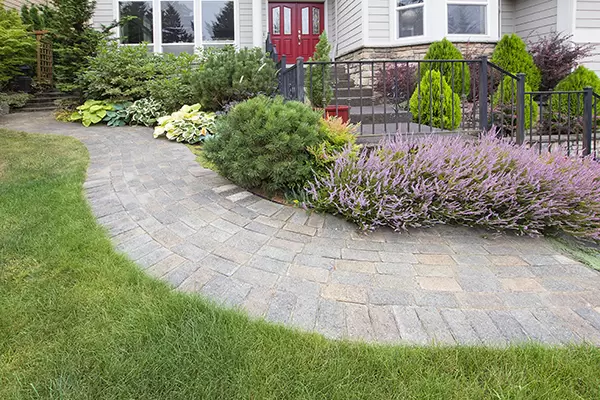
Humans have been building structures for thousands of years, discovering a variety of materials along the way. While some are chosen for cost-efficiency and others for pure practicality, it is incredibly difficult to argue against the enduring beauty of masonry—especially brick. There is something about a brick wall or a sweeping stone walkway that gives a home a sense of permanence and timeless charm.
Brick will certainly last a lifetime, but it still needs to be cleaned on occasion if you want it to live up to its full potential. Below, we cover the best ways to clean your brick walls, sidewalks, and walkways without causing any expensive damage to the mortar or the masonry itself.
While brick is highly resilient, it is also porous. Over time, it collects dirt, dust, and corrosive salt deposits known as efflorescence. Worse, in humid or heavily shaded areas, mold, mildew, and green algae can deeply infiltrate the porous surface and the mortar joints.
All of these factors can make your brick look drab, create slippery walking hazards on walkways and pavers, and—if left unchecked—eventually compromise the structural integrity of the mortar itself. Regular professional cleaning is the single most effective way to protect your masonry investment.
When homeowners decide to tackle dirty brick themselves, they typically take one of three approaches—each with serious drawbacks.
You can always get on your hands and knees with a bucket of soapy water and a stiff brush. While this is the gentlest method and safe for the environment, it is backbreaking work and generally ineffective against deeply rooted algae, heavy mineral staining, or years of embedded grime.
Some homeowners reach for heavy acids or generic bleach mixtures from the hardware store. If not properly diluted, applied, and neutralized, these chemicals can kill your expensive landscaping, leach into groundwater, and permanently discolor or etch the face of your brick.
This is where the most serious and costly damage happens. It is incredibly easy to hold a high-pressure nozzle too close to the brick surface. Doing so can literally blast away the mortar holding the bricks together—a repair known as repointing that can cost thousands of dollars—and can permanently scar the face of the brick itself. Cold water also fails to break down oily residue and deep-set organic growth; it simply pushes contamination around.
Professional brick cleaning should never rely on extreme, destructive force. The right approach is always tailored to the type of masonry surface.
Professionals use specialized flat-surface cleaners paired with hot water power washing. Heated water actively breaks down embedded grime, oily residue, and salt deposits that cold water simply cannot dissolve. The result is a faster, deeper, and longer-lasting clean that restores the original color and texture of your pavers.
Delicate vertical brick, aged mortar, and historic stonework require a completely different approach: soft washing. This low-pressure method uses professional-grade, biodegradable cleaning solutions to kill mold, mildew, and algae at the root—rather than simply blasting the surface. With soft washing, there is no risk of mortar damage or brick scarring.
How often should brick be professionally cleaned? Most exterior brick surfaces benefit from a professional cleaning every 2–3 years. High-traffic walkways or shaded, moisture-prone walls may need attention annually.
Will pressure washing damage my mortar? It can—especially with cold water and too-high PSI. That is why professional hot water systems and proper standoff distances are critical. A trained technician knows how to clean thoroughly without causing harm.
Can you clean brick in any weather? Professional cleaning is best performed in temperatures above freezing. Water forced into porous brick in near-freezing conditions can expand and cause spalling or cracking.
Is hot water power washing safe for all brick types? Hot water is safe for the vast majority of brick and masonry, but very old or extremely porous brick may require an exclusively soft-wash approach. A professional assessment before cleaning is always recommended.
Pressure washing brick is a tedious and risky task when attempted without the right equipment, knowledge, and experience. You have to source the correct equipment, calculate safe chemical ratios, and hope you do not accidentally etch the brick or damage the mortar joints—all before a single square foot is clean.
Instead, leave it to the professionals. Since 1990, A+ Power Washing and Roof Cleaning has been the trusted choice for homeowners throughout Monmouth and Ocean counties in New Jersey. Our proprietary A+ Smart Wash™ system utilizes hot water to safely dissolve dirt and kill organic growth at the root—delivering a deeper, longer-lasting clean than any rented cold-water machine can provide.
With over 36 years of local experience and over 1,700 five-star Google reviews, your home is in the best possible hands. Our guarantee is straightforward: if you are not completely satisfied, you do not pay.
Do not risk damaging your beautiful masonry. Contact us today or call 732-775-1242 for a free, no-obligation estimate—and let us make your brick look brand new again.
Contact A+ Power Washing and Roof Cleaning for The Best Service Anywhere™.